.png)
A creative refresh sounds simple: new photos, new copy, ship it. In practice, it's three separate bottlenecks stacked on top of each other, and most teams feel all three every time a campaign needs new life.
When refresh cycles slow down, ad fatigue sets in before the next round of creative is ready. Meta's own performance guidance points to the same idea: creative is one of the biggest levers in the system, and stale creative is one of the fastest ways to lose ground. If the creative pipeline can't keep pace, the ad account pays for it in rising costs and shrinking returns, regardless of how sound the targeting or offer is underneath.
That's the problem I set out to fix. Over the last quarter, I've used Claude to rebuild how I handle Meta creative refreshes for clients, and the numbers from one account tell the story better than I could explain it.
Where Do Creative Refreshes Get Stuck?
None of the three bottlenecks below are hard on their own. Stacked together, across every client, every month, they're where creative teams lose their week.
The copy problem. Every refresh starts with a pile of client discussion notes that need to become platform-ready copy (headlines, intros, CTAs) without losing the brand's voice along the way. That's a translation job, and it's slower than it looks.
The image and video problem. Building the creative itself, usually in Canva, Figma, or a similar tool, means matching brand standards and hitting exact specs for every placement Meta supports. One ad set can mean a few different crops before it's ready to ship.
The revision problem. Client feedback comes back as a series of notes, and turning that into a clean, simple next draft without losing what was already working takes another full pass through the same steps.
What Changed When I Brought Claude Into the Process
This isn't "AI makes ads." It's Claude working from the same brand standards and templates our team already trusts, just compiling and applying them faster than a person can type.
I gave Claude four things going into each refresh:
- Copy requirements — the brand voice guide plus a project-specific creative hook prompt covering intro copy, headlines, CTAs, and overlay text
- Formatting requirements — Meta's image and video specs, plus the client's preferred image library
- Brand standards — fonts, colors, logo treatment
- A previous ad as a template — so spacing and layout stayed consistent, which was the first hurdle I had to solve before the output looked native to the brand rather than templated. This also provides an opportunity to expand upon an initial creative implementation (what was working and expanding upon it)
The fourth input opened up something more useful than a starting point. Instead of building each refresh from a blank page, I started feeding Claude the copy from whichever prior ad had performed the best: its headline, eyebrow, CTA, and badge, along with the context on why it had worked.
From there, I prompted Claude to hold the pieces that were proven — the headline, the proof point, the structure — while generating new variation in the supporting copy and imagery around them.
Here's the brief I gave Claude, the same notes that would otherwise go to a designer:
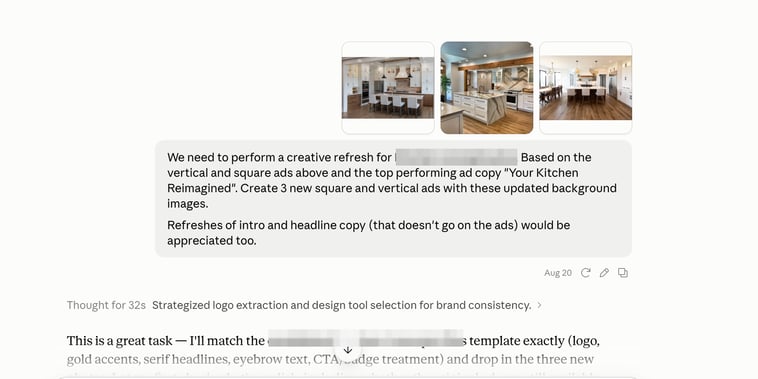
The Claude conversation showing the client's original ad and the creative refresh request
And here's what came back — three on-brand concepts, built to the client's existing template:
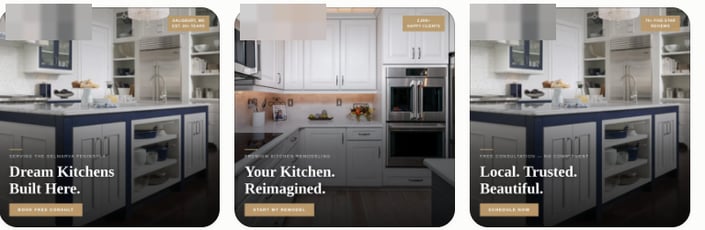
Three finished ad concepts side by side
Each concept led with the top-performing headline, then varied the supporting copy and image underneath it:
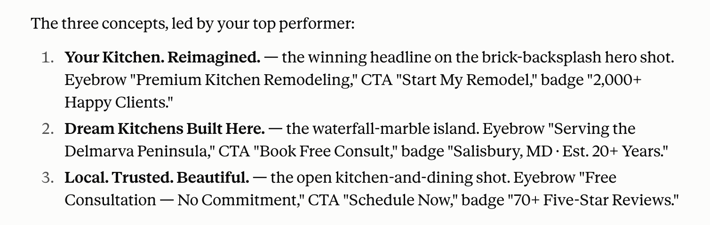
Breakdown of headline, eyebrow, CTA, and badge copy for each concept
And the finished ad, matched to brand — logo, accent colors, serif headline, badge treatment, all in place:

Finished ad at full size with logo, headline, and CTA
The Claude creative refresh process doesn’t replace copy writing and image design best practices, but it can accelerate them. In this example, the acceleration affect provided big results from Paid Media for this client.
Context
The client is a home remodeling contractor running $4,000 a month in paid budget. In January of 2026, the starting channel mix used Meta, Google Search, Local Services Ads, and Display — no initial insights and expansion of the Meta creative refresh with Claude yet in the picture.
Before the Refresh
The initial testing quarter produced strong deal value relative to spend. Then, heading into the seasonal lull of late spring and summer (the local slow stretch for kitchen and bath projects in the region) deal value started dipping month over month. Budget stayed flat. Something in the mix needed to change, and the client didn't have room to spend more.
The Shift
That's where the Claude creative refresh came in, applied to Meta within the client's existing budget. One month later, the numbers turned.
Here's the HubSpot report I pulled the data from:
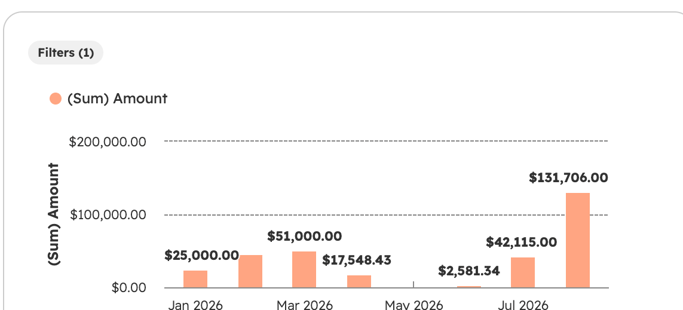
HubSpot dashboard showing the paid media deal value report, climbing to $131,706 in August
The monthly deal value chart tells the clearest version of the story. August hit $131,706 — the highest month in the reporting period.
HubSpot's own summary of the report backs up the trend, putting the average monthly deal value from paid search at $39,488.53:
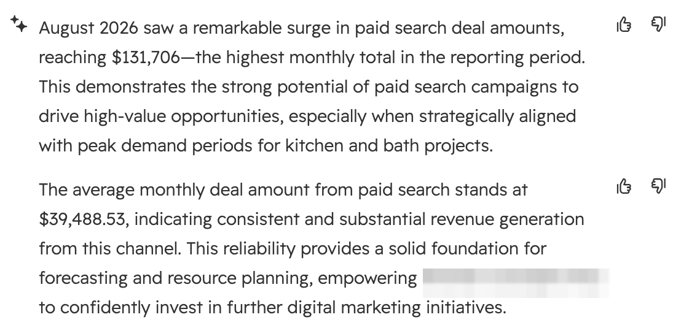
HubSpot AI summary calling out the $131,706 August total and $39,488.53 monthly average
New contact volume moved in the same direction. Both paid search and paid social show a sharp rise starting in late July, following the Claude creative refresh:
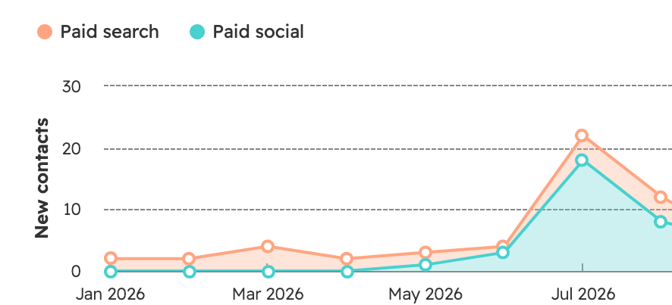
Chart showing new contacts from paid search and paid social climbing starting in July following the second round refresh with Claude
After the Refresh
|
Metric |
Before |
After |
|---|---|---|
|
Monthly budget |
~$4,000 |
~$4,000 (unchanged) |
|
Best month (paid search deal value) |
$51,000 |
$131,706 (August) |
|
Avg. monthly deal value |
$20,000 |
$39,488.53 |
|
New contacts trend |
Flat, low single digits |
Sharp rise starting late July |
The point here isn't that Claude made a set of ads go viral. It's that the same budget produced more deal dollars once the creative bottleneck was the thing that got fixed. Nothing else in the account changed — not the spend, not the targeting, not the offer.
How Can I Accelerate My Creative Testing?
If refresh cycles are what's slowing your paid social down, that's a fixable process problem, not a budget problem. The fix isn't a bigger spend or a new agency — it's giving a tool like Claude the same brand standards, templates, and top-performing copy your team already has, and letting it handle the compiling and formatting work that eats the week.
If your team is already exploring where AI fits into revenue-generating work, creative production is one of the more immediate places to start, because the inputs (brand guides, past ad performance, platform specs) already exist. The work is in structuring the prompt, not inventing the process from nothing.