
HubSpot Buyer Intent is a Breeze Intelligence feature that identifies companies researching your products or visiting your website, before anyone fills out a form. It works by tracking two types of signals — on-site behavior (visitor intent) and off-site research activity (research intent) — and matching them against a target market you define. Buyer Intent is available on HubSpot Starter and higher-level Hubs; adding companies through it consumes Breeze credits.
For manufacturers and industrial sellers, HubSpot Buyer Intent closes a specific gap: by the time a prospect sends an RFQ or fills out a form, they've often been evaluating you for weeks. Buyer Intent surfaces that research phase early, so sales can reach out before a competitor does.
This guide covers how HubSpot Buyer Intent works, why it matters for industrial sales cycles, and how to configure it so the signals are useful instead of noisy.
Key Takeaways
- Visibility beats guesswork. Instead of waiting for an RFQ, Buyer Intent gives you visibility into the research phase itself — where relationships actually get built.
- Configuration determines value. Buyer Intent is only as good as the Target Market and Intent Pages you define. Skip that step, or leave it too broad, and your team will eventually start ignoring the alerts.
- Account-level data needs a partner. Because Buyer Intent works at the company level, pair it with your existing lead scoring and contact data to make it actionable — it's the "who's circling" layer on top of your "who's ready" layer.
- Speed is the real competitive advantage. In sourcing and RFQ-driven markets, being the first vendor to reach out often matters as much as the pitch itself.
What Is HubSpot Buyer Intent, and How Does It Work?
HubSpot Buyer Intent is part of Breeze Intelligence, HubSpot's AI-powered data and enrichment suite. It identifies companies engaging with your brand online, even anonymously, using two distinct signal types.
Intent Signals (On-Site Behavior)
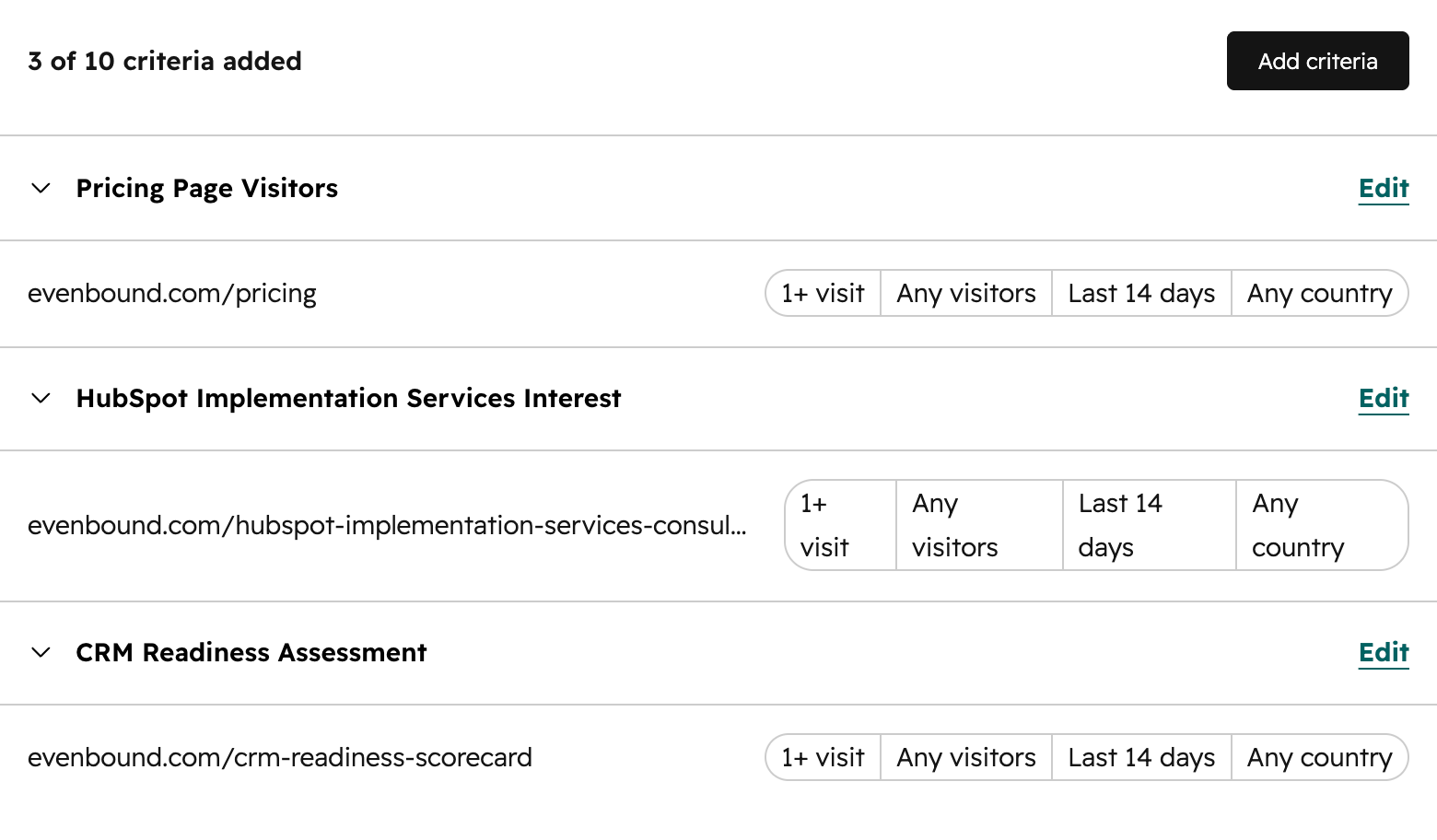
HubSpot flags companies visiting your highest-intent pages: product sub-pages, secondary contact forms, or a specific conversion asset like a CRM readiness scorecard. When one or more people from the same company visit those pages, HubSpot shows you the company name, how many visitors it had, and how many high-intent pages they viewed. From there, you can add the company directly to your CRM.
Research Signals (Off-Site Behavior)
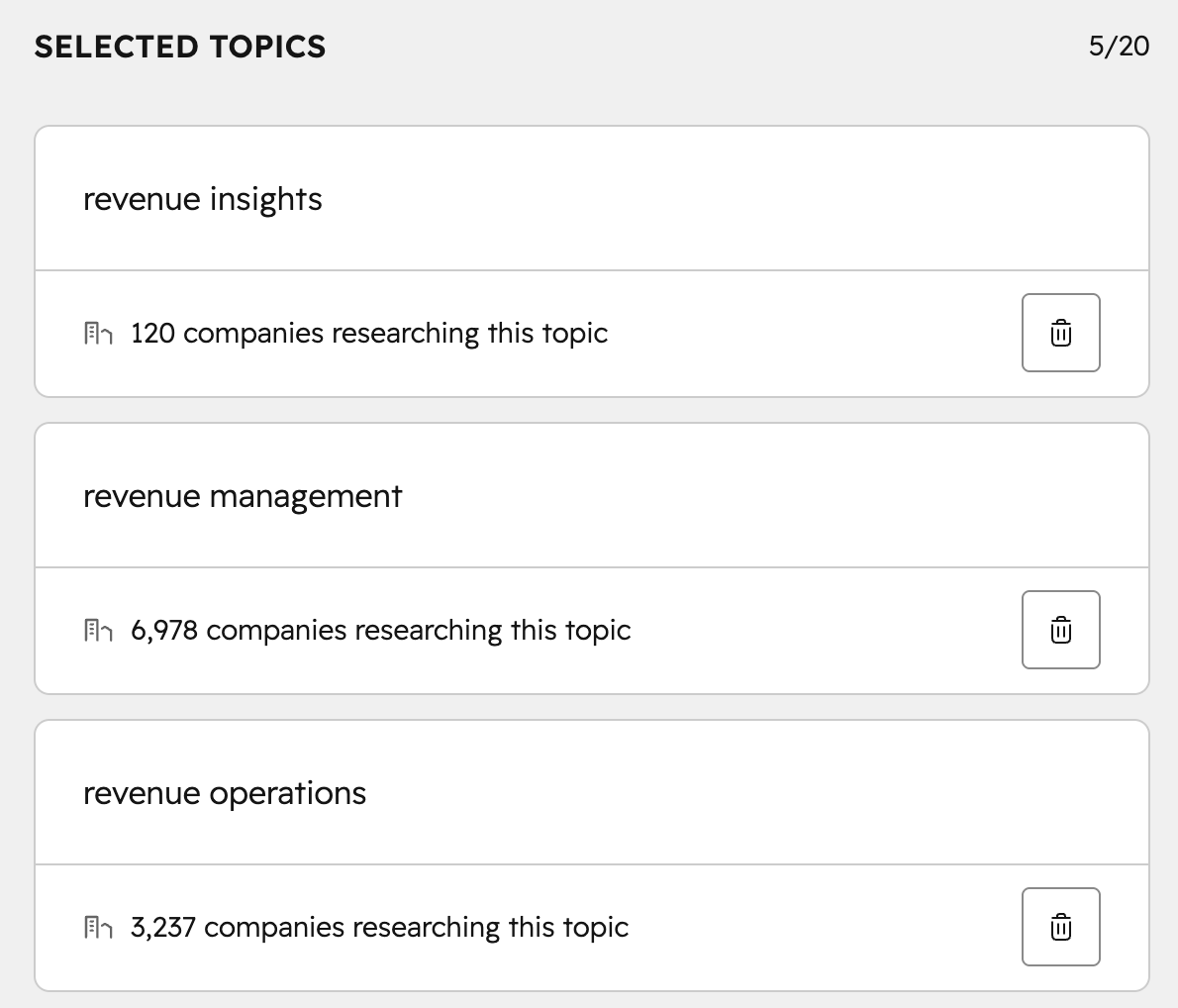
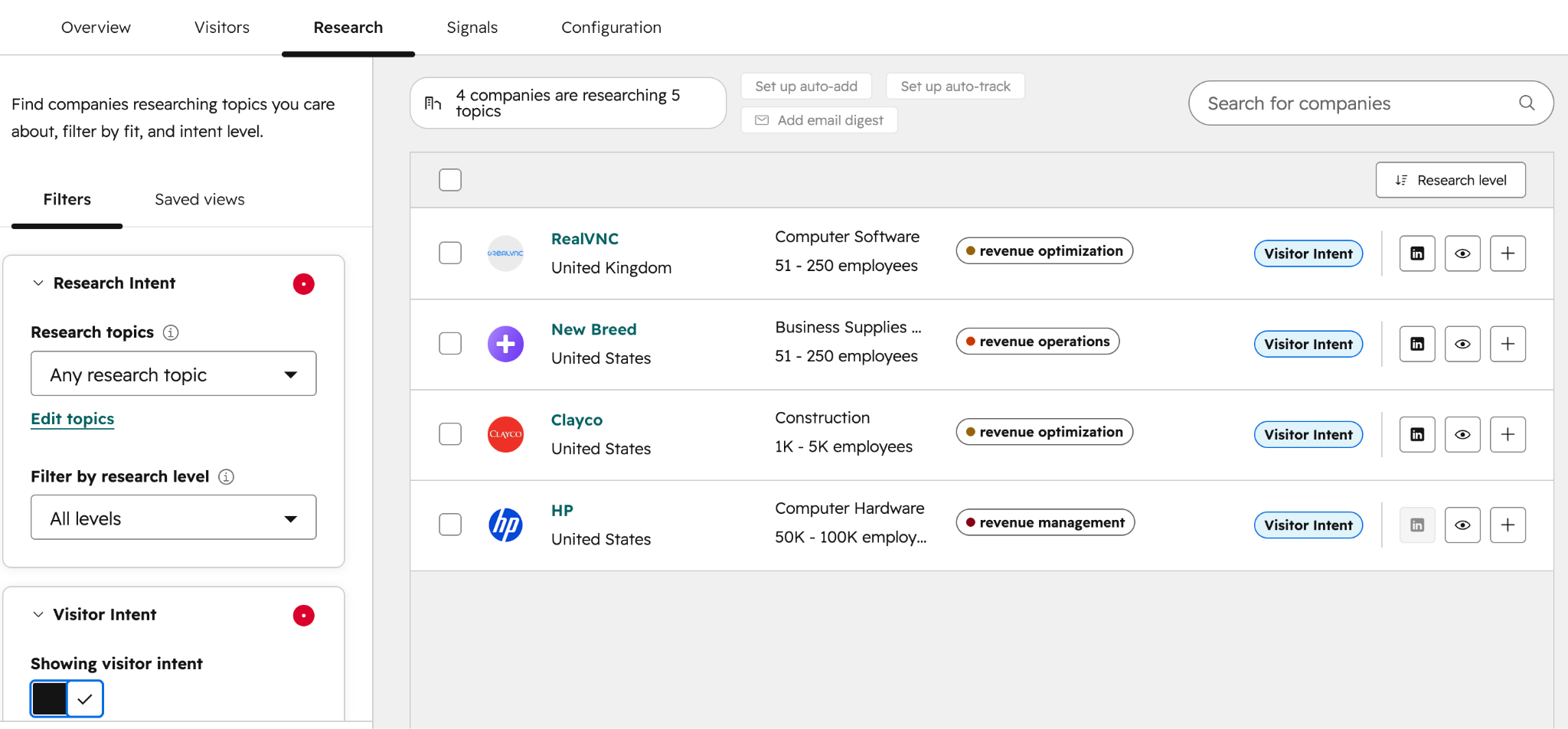
You define a list of research topics relevant to your business. For example, "automation technology" or "CNC machining." HubSpot then surfaces companies across its broader tracked network that are actively researching those topics right now, including companies that have never visited your site.
Both signal types can be layered with a defined target market (industry, sub-industry, company size, or annual revenue) so you only see companies that truly fit your ideal customer profile.
Why Does HubSpot Buyer Intent Matter for Industrial Manufacturers?
Industrial sales cycles are longer, quieter, and involve more stakeholders than typical B2C or B2B sales in other industries, which is exactly what HubSpot Buyer Intent is built to surface.
- Sales cycles are long and quiet. Engineers, procurement teams, and plant managers research extensively before anyone contacts sales. Buyer Intent gives you visibility into that quiet period instead of leaving you in the dark until an RFQ shows up.
- Many buyers never fill out a form. They're downloading spec sheets, reviewing CAD files, and browsing capabilities pages — signals traditional lead capture misses entirely.
- Deals involve multiple stakeholders. Engineering, purchasing, and operations may research independently. Account-level visibility matters more here than any single lead, since it shows the full picture of who's engaged.
- RFQ and sourcing cycles reward speed. Knowing which companies are actively evaluating you before your competitors do gives your sales team a first-mover advantage.
What Signals Does HubSpot Buyer Intent Track?
HubSpot Buyer Intent tracks five categories of signals: visitor intent, research intent, company news, contact-level signals, and custom signals.
|
Signal Type |
What It Captures |
|---|---|
|
Visitor Intent |
Anonymous companies hitting high-intent pages on your site (pricing, capabilities, spec sheets, quote forms) |
|
Research Intent |
Companies researching topics relevant to your business across HubSpot's broader network |
|
Company News |
Funding events, executive hires, expansions, new facility openings |
|
Contact-Level Signals |
Job changes and bounce risk for known contacts |
|
Custom Signals |
Plain-language, custom-defined signals, such as companies actively posting jobs for CNC operators |
How to Set Up HubSpot Buyer Intent for a Manufacturing Business
Getting value from HubSpot Buyer Intent depends almost entirely on configuration, not the tool itself. Follow this setup sequence:
- Confirm your tracking code is installed sitewide. Nothing else works without this foundation.
- Define your target market. Be specific about industry, company size, and region (i.e., "industrial distributors, 50–500 employees, North America" is far more useful than leaving it wide open).
- Choose your intent pages carefully. Spec sheets, capabilities pages, and quote request forms are strong signals. A generic "Contact Us" page is not, since almost any visitor can land there for unrelated reasons.
- Set up tracking and auto-add rules. Build workflows so qualifying companies get added to your CRM automatically. Also define what happens after a company is added. Don't let it sit unused.
- Layer in research intent topics. Add subjects specific to your product categories so you catch companies researching your space before they ever visit your site.
How to Turn Buyer Intent Signals Into Sales Conversations
Buyer Intent only creates value once it changes what your team does next. Here's how the two signal types typically fit into a sales and marketing motion:
- Research intent → early-stage nurture. Trigger educational content, case studies, and other top-of-funnel touches for companies just starting to explore the space.
- Visitor intent → late-stage sales activation. When a named account repeatedly hits your pricing or spec pages, that's your cue for direct outreach.
- Feed signals into lead scoring and workflows. Let Buyer Intent data strengthen the automation you already have rather than operate as a separate system.
Example: A plant engineering firm starts researching "CNC machining tolerances." HubSpot flags the account through Research Intent. A rep follows up referencing that exact topic, turning cold outreach into a conversation that already feels relevant and informed.
What Mistakes Should Manufacturers Avoid With HubSpot Buyer Intent?
The most common mistake is skipping configuration and treating HubSpot Buyer Intent as plug-and-play. Other missteps to avoid:
- Tracking every visitor instead of narrowing by target market. Without a defined market, you'll drown in noise instead of surfacing real signals.
- Treating it as individual-level lead data. Buyer Intent works at the account level. It should complement your lead scoring and account-based marketing, not replace individual-level outreach.
- Skipping sales and marketing alignment. If both teams haven't agreed on which signals warrant outreach, the data sits unused.
How Is Buyer Intent Different From Traditional Lead Capture?
Traditional lead capture is passive; Buyer Intent is proactive. With traditional lead capture, you wait for someone to fill out a form — until then, you have no idea they exist. Buyer Intent surfaces accounts engaging with your content and topics whether or not they've ever converted.
The two aren't competing approaches. Buyer Intent surfaces the accounts worth watching, while lead scoring and forms still qualify the individual contacts inside those accounts. Used together, you get both "who's out there" visibility and "who's actually ready to talk" qualification.
Get Help Configuring Hubspot’s Buyer Intent Tool
We work with manufacturers and industrial businesses navigating this exact challenge: long sales cycles, multiple stakeholders, and buyers who do their homework long before sales gets a call. Tools like HubSpot Buyer Intent fit that reality well, but only when configured with real strategy behind them.
Setting up tracking is the easy part. Defining the right target market, choosing intent pages that signal something, and building workflows that turn signals into timely outreach — that's where the value shows up, and it's the configuration work we help clients think through every day.
Ready to put Buyer Intent to work? Reach out to Evenbound and we'll help you configure Buyer Intent for the way your team actually sells.