

B2B industrial thought leadership is the practice of publicly sharing your team's problem-solving expertise during the consideration phase, before prospects ever reach out to sales.
Your team already solves the pain points your brand promises to address, every single day. When that expertise comes from a person rather than a logo, it builds trust faster, because people naturally prefer working with people.
When your leaders consistently share real solutions to real industrial problems, they reinforce what your brand stands for through a personal point of view that prospects find easier to trust. By the time those prospects contact sales, they already understand your value because they've experienced your team's expertise firsthand.
Key Takeaways
- Thought leadership starts with what your team already knows. B2B industrial thought leadership means publicly sharing the problem-solving your team does every day, before prospects ever contact sales.
- Buyers make up their minds early. In 6sense's 2025 buyer study, first contact with sellers came 61% of the way through the buying process, so expertise shared only on sales calls arrives too late.
- People trust people more than logos. The same insight builds credibility faster when it comes from a named practitioner who has solved the problem than when it comes from a brand account.
- The system can be small and still work. Thirty minutes every Friday and one post per week from each participating leader is enough to build the consistency that earns trust.
- Practical beats polished. Real, slightly imperfect advice from the people doing the work is what makes your brand promise believable.
Why Does Industrial Expertise Stay Stuck in Sales Calls?
Most industrial companies have no shortage of expertise. The problem is where that expertise lives and when it gets shared:
- It's shared one person at a time. Teams with deep experience solving complex problems only share it during individual sales conversations.
- It's buried in inboxes. Knowledge that could influence hundreds of prospects sits in email threads and client project files instead of in front of the market.
- It shows up after the decision is forming. Companies wait for prospects to reach out before sharing what they know, so they miss the consideration phase entirely.
- Competitors get there first. By the time a prospect is ready to buy, several other companies have already pitched them a similar solution.
- Sales carries the education load. Reps spend weeks walking prospects through basics that an experienced leader could have covered publicly in a single post.
Here's the reframe I keep coming back to. Your brand promises to solve problems, and your team proves it by solving those problems every day. When that expertise is shared by a person instead of promoted by a company, prospects trust it more, because they're choosing to follow someone rather than being marketed to by a logo.
 Are you a sales or marketing leader looking for more ways to drive revenue?
Whether you're building pipeline or closing it, we've pulled together practical ways to get more out of HubSpot for your role.
How Do Industrial B2B Buyers Research Vendors Today?
Industrial buyers research and form opinions long before they contact a vendor. Broader B2B data backs this up: in 6sense's 2025 study of nearly 4,000 buyers, first contact with sellers happened 61% of the way through the buying process, and the vendor that buyers favored before talking to sales won 80% of deals.
That creates a gap between how buyers behave and how most industrial companies plan for them.
|
What most industrial B2B companies assume: |
What industrial B2B buyers really do: |
|
Buyers will research us when they're ready to buy |
Find people posting about their challenges on LinkedIn, YouTube, and Reddit, often because the platform surfaces those posts to them |
|
Our website and sales outreach drive awareness and conversions |
Read real solutions from practitioners who have faced their exact problem |
|
Sharing expertise is optional, a personal brand play for executives |
Build trust with an individual during research, not during the pitch |
|
Leads come from paid ads and inbound forms, not from people educating the market |
Contact vendors already knowing whose perspective they want to work with |
|
Qualification happens on the first sales call |
Choose the adviser they found rather than the company that cold-called them |
If this sounds familiar, it's the same principle behind Marcus Sheridan's They Ask, You Answer and its follow-up, Endless Customers. Buyers reward the companies that openly answer their questions, and they increasingly decide who they trust before a salesperson ever gets involved.
The takeaway for industrial leaders is that you're leaving money and efficiency on the table if you build awareness around the company while prospects build opinions around the person who understands their problem. Sharing expertise during the consideration phase instead of the sales phase flips that dynamic in your favor.
What Strategic Mistakes Hold Industrial Companies Back?
These aren't execution mistakes. They're strategy problems, and I see them inside a lot of otherwise well-run industrial companies:
- Treating problem-solving expertise as a sales tactic instead of a way to reinforce what the brand promises
- Keeping daily expertise locked in one-on-one conversations instead of sharing it while prospects are still weighing options
- Waiting until prospects are ready to buy before sharing what the team knows about their pain points
- Assuming posts need to be polished corporate content rather than practical advice from the people doing the work
- Overlooking how much more trustworthy expertise feels when it comes from a person instead of a brand
None of these are bad instincts. They're simply missing the human element that makes a brand promise believable. And yes, that applies to industrial and B2B markets too, because no matter how technical the product is, there's still a person on the other side of every buying decision.
What High-Performing Industrial Companies Do Differently
The companies that get this right treat expertise as the engine that qualifies leads, not just another lead source. Here are four things they do consistently.
1. They share expertise in a way that reinforces their brand pillars
An operations director posting about how they untangled a supply chain problem reinforces your brand's promise to manage complexity. A project manager sharing how they recovered a slipping construction schedule puts a real face on your construction expertise, and a sales leader writing about vendor relationships backs up what your brand says about partnership. Each post comes from someone who lives your brand values every day, rather than from a corporate messaging guide.
2. They qualify leads through personal trust, not just brand awareness
A prospect reads a post from your operations director and thinks, "This person understands my exact problem." When that prospect eventually needs a solution, they remember who helped them think it through. By the time they contact sales, they already trust your team, so the conversation can skip the education phase and move straight to whether you're the right fit.
3. They build a simple system that turns daily expertise into ongoing reach
The commitment is smaller than most leaders expect, and consistency matters far more than polish:
- 30 minutes every Friday to capture one useful insight from the week's work
- One post per week from each participating leader
- HubSpot social agents to craft content based on notes and automate scheduling, so execution never gets in the way of the thinking
4. They keep it grounded in real problems, not positioning
The best posts answer "How do I solve this?" rather than "Why should you buy from us?" and rarely mention the company at all. When value comes first, trust builds over time and conversions tend to follow on their own. The company brand stays consistent and professional, while individual expertise adds the personal credibility that makes the brand promise feel real.
Here's what that looks like on the platforms industrial buyers use.
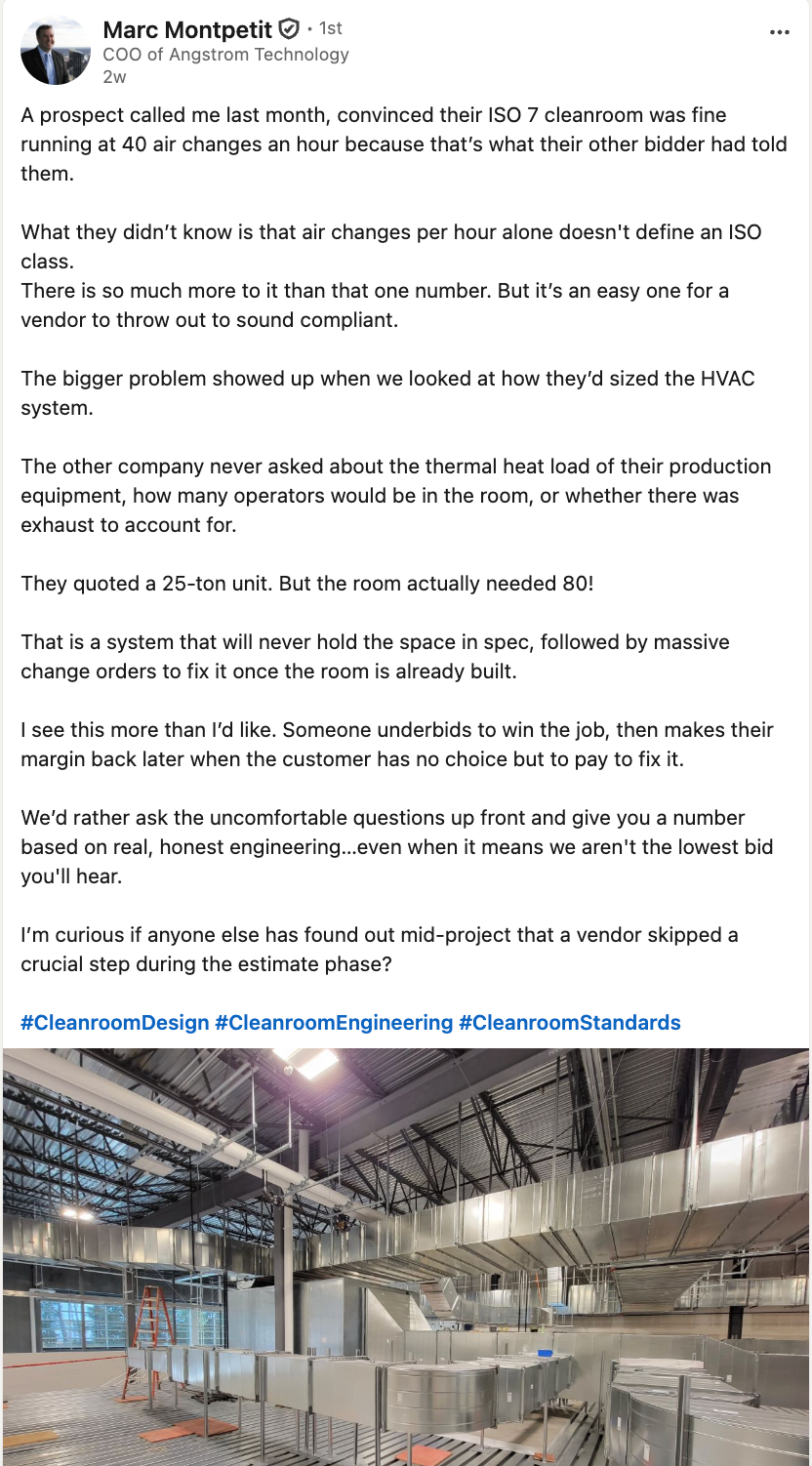
The Mindset Shift Behind B2B Industrial Thought Leadership
Thought leadership isn't about personal branding, and it isn't about competing with your company brand. It's about making your brand promise believable by putting real people behind it.
A few ideas make that shift click for the leaders I work with:
- Your team's daily problem-solving is proof. It's the clearest evidence that your brand can deliver what it promises.
- People follow people. That isn't a weakness in your brand; it's simply how human trust works.
- Personal perspective adds credibility. Expertise shared from an individual's point of view reinforces your brand pillars in a way corporate copy can't.
- Familiarity beats advertising. Prospects would much rather reach out to someone they already know than respond to an ad from a company.
Why is it so hard for technical experts to post thought leadership content?
The hardest part of this usually isn't strategy. It's getting smart, experienced people comfortable sharing what they know in public.
Technical leads like engineers or contractors tend to share ideas freely with each other and with clients, but the moment they’re asked to post something on social media or contribute to a blog, they clam up. Even the people who are typically more comfortable in that arena sometimes struggle to not overthink every word, because they want it to be perfect.
That instinct is understandable, but it works against them. A practical, slightly imperfect post from someone who clearly does the work builds more trust than a polished one, because the humanness is what makes it credible.
That's the gap we focus on with our industrial and construction clients at Evenbound. The expertise is already there, so the work is helping teams see the value in sharing it, making the process easy enough to sustain, and connecting it to the brand and the sales motion so it shows up in the pipeline.
One Director of Sales I worked with told me he had no idea where to start with thought leadership, so we kept it simple and focused on building momentum. I put together a handful of questions about the most thought-provoking conversations he'd had with prospects that week, the objections that kept coming up, and the questions he wished more buyers would ask.
Once we started talking, the conversation unfolded naturally and his expertise came pouring out. He didn't realize it at the time, but simply telling those stories from his perspective, and walking me through what goes through his mind in those moments, gave us material for several LinkedIn posts. Before that conversation, his posts averaged about 11 total likes, comments, and shares. The posts that came out of it regularly cleared 100 engagements, roughly nine times his usual reach.
If starting from a blank page feels daunting, try talking it through with a colleague instead.
Are You Ready to Make Your Brand Promise Real Through the People Who Live It?
Most industrial companies don't struggle with thought leadership because their teams lack expertise. They struggle because they're asking the brand to do all the convincing, when people are what convince people.
When expertise is treated as something you only pull out to close deals, prospects never see it and never learn who's behind the brand. When it's treated as a way to prove your brand promise through real people sharing real solutions, it changes how prospects think about your company and who they want to work with.
The barrier isn't talent; it's perspective. Your brand makes a promise, your team proves it every day, and when prospects see that proof coming from actual people, your brand becomes believable.
Need help connecting your team's daily expertise to your brand promise?
At Evenbound, we help industrial and construction leaders share what they know in a way that reinforces the brand and builds trust before sales conversations start. That includes identifying what knowledge is worth sharing and setting up a sustainable posting cadence with HubSpot social agents, so your team's problem-solving reaches the prospects who need to see it.
Want to get started? Reach out to the Evenbound team and let's talk.