
What is social media ROI for manufacturers?Social media ROI for manufacturers is measured by how social activity influences traffic, leads, and revenue—not just engagement. Using tools like HubSpot, manufacturers can track how social posts contribute to website visits, contact creation, and deals over long sales cycles. |
For many teams, social media ROI for manufacturers feels necessary, but it can be difficult to measure.
You are posting on LinkedIn. Sharing product updates. Promoting trade shows. Highlighting company news.
But when leadership asks, “What are we actually getting from this?” the answer is often unclear.
The issue is not that manufacturers are investing in social media. It is that they are measuring it the wrong way.
Social media ROI for manufacturers doesn’t look like eCommerce. It rarely leads to immediate conversions. Instead, it plays a critical role earlier in the buying journey. If you are only tracking last-touch attribution, you are missing most of its impact.
The good news is that HubSpot gives B2B manufacturers the tools to connect social activity directly to traffic, leads, and revenue. That makes ROI measurable, even in complex sales environments.
Why Social ROI Feels Unclear for Manufacturers
Most manufacturers are actively using social media, especially LinkedIn.
Common activities include:
- Sharing product updates
- Promoting trade shows
- Posting company announcements
The challenge is connecting these efforts to real revenue or sales conversations.
Unique Challenges in Manufacturing Marketing
Manufacturing marketing includes several complexities:
- Long sales cycles
Deals can take months or even years
- Multiple stakeholders
Engineers, procurement teams, and executives all influence decisions
- Distributor and sales rep involvement
Not every interaction happens digitally
- Offline and online touchpoints
Trade shows, calls, and meetings all play a role
Because of this, social media is rarely the final conversion point.
It plays a role earlier in the process by influencing awareness and consideration.
Why Social ROI Is Hard for B2B Manufacturing Companies
If measuring ROI feels difficult, there are structural reasons behind it.
Long Sales Cycles
From the first interaction to the close, timelines can span months or years.
Multiple Decision-Makers
You are influencing a group, not just one person:
- Engineers
- Sourcing teams
- Leadership
Indirect Conversion Paths
Many deals do not follow a simple digital journey. Distributors, reps, and offline conversations are often involved.
Heavy Offline Influence
Trade shows, plant visits, and in-person meetings still play a major role.
Key takeaway: Social media is typically an early-stage influence, not a final conversion driver.
What “Social ROI” Actually Means in HubSpot
Social ROI is not about likes, comments, or follower growth.
In HubSpot, it means tracking the full journey:
- Social post → click
- Website visit → content engagement
- Form submission → contact creation
- Deal creation → revenue
Key Metrics to Understand
- Social-driven sessions
- Contacts generated from social
- Influenced contacts
- Deals influenced by social
- Revenue attribution
Example:
A LinkedIn post promotes a new product.
An engineer clicks through, downloads a spec sheet, becomes a lead, later submits an RFQ, and eventually converts into a deal.
This is how social contributes to revenue.
How HubSpot Tracks Social Media Performance
HubSpot connects activity across marketing and sales.
- Tracks clicks from social posts to your website
- Monitors visitor behavior, such as pages viewed and conversions
- Connects activity to contact records in your CRM
- Applies attribution models, including first-touch, last-touch, and multi-touch
This allows you to see how early engagement contributes to the pipeline, not just final conversions.
Step-by-Step: How to Measure Social ROI in HubSpot
1. Centralize Social Tracking
If you are publishing natively on platforms like LinkedIn, attribution becomes fragmented.
To improve accuracy:
- Connect LinkedIn, Facebook, and other platforms to HubSpot
- Centralize publishing and reporting
LinkedIn is typically the highest-value platform for B2B manufacturers.
2. Publish Social Posts Through HubSpot
Use HubSpot’s social tool instead of posting directly on platforms. Pairing this with AI for social media content creation can help your team generate posts faster while maintaining consistency.
This ensures:
- Accurate tracking
- Clear attribution
Content ideas:
- Product applications and use cases
- Case studies and customer success stories
- Trade show promotions
- Educational or technical content
3. Do Not Confuse Engagement with Buying Intent
High engagement does not always correlate with pipeline impact.
In manufacturing, technical posts may:
- Receive fewer likes
- Generate higher-quality leads
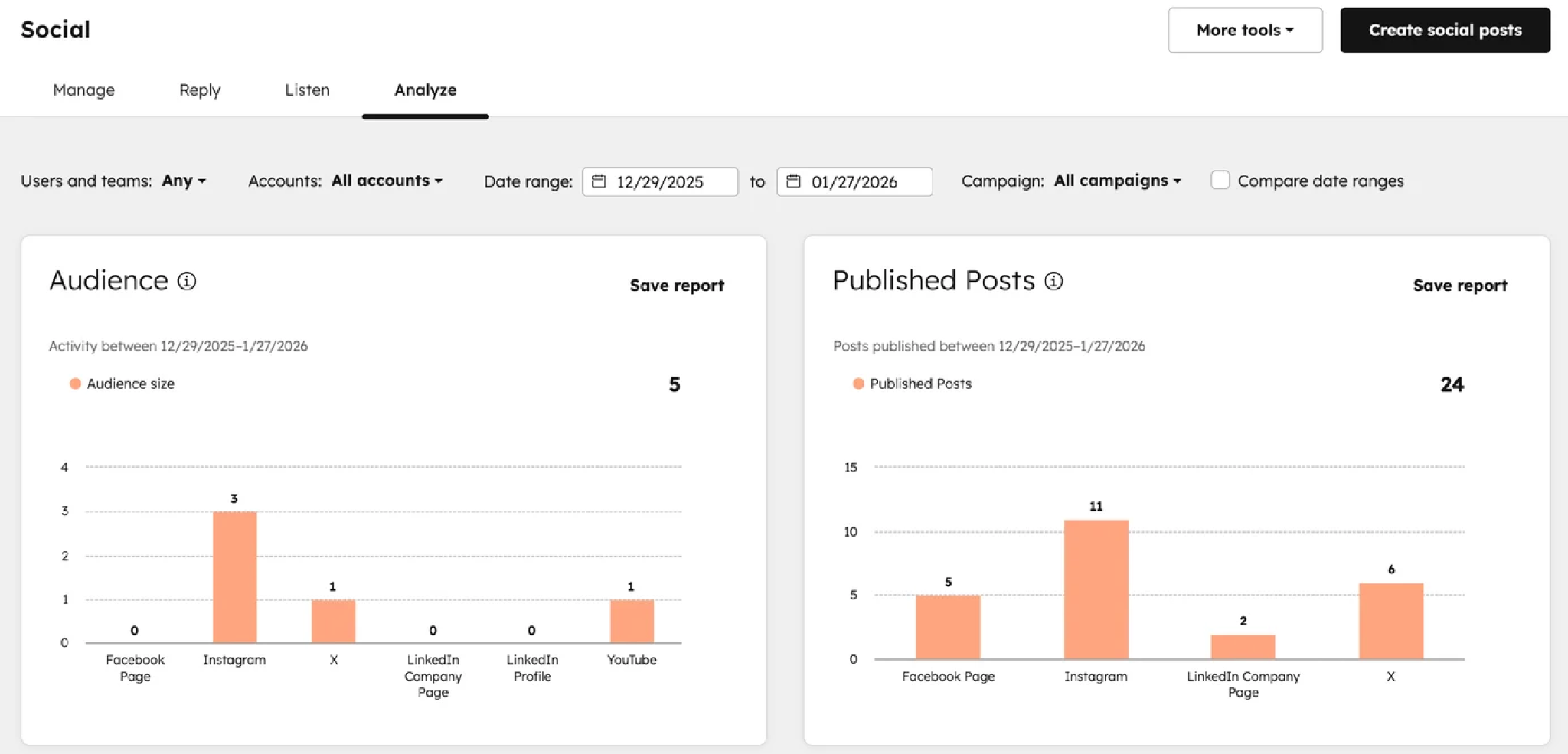
In HubSpot’s social reporting dashboard, analyze:
- Clicks
- Engagement
- Top-performing posts
Focus on which posts drive meaningful interest.
4. Track Website Traffic from Social
Review sessions driven by social media and analyze behavior:
- Pages visited
- Time on site
Pay attention to visits to high-intent pages such as:
- Product pages
- Spec sheets
- RFQ or contact forms
5. Measure Lead and Contact Generation
This is where social begins to have an impact on business.
Track:
- Contacts created from social traffic
- Conversion points such as:
- RFQs
- Quote requests
- CAD downloads or spec sheets
6. Analyze Deals Influenced by Social
Use HubSpot attribution reporting to identify:
- Deals where social played a role
- Key touchpoints in the buyer journey
Social is often not the last interaction. It contributes earlier in the process.
Example journey: LinkedIn post → blog visit → return visit → RFQ → closed deal
7. Use HubSpot Campaigns to Track ROI
Group related efforts into campaigns:
- Social posts
- Landing pages
- Emails
Then measure:
- Campaign performance
- Influenced revenue
Common use cases:
- Product launches
- Trade show campaigns
- Industry-specific promotions
What Happens When You Misread Social ROI?
- Underinvestment in high-impact channels
- Overvaluing low-quality engagement
- Misalignment between marketing and sales
- Missed pipeline visibility
How High-Performing Manufacturing Teams Evaluate Social ROI
Leading teams take a different approach.
They:
- Evaluate pipeline influence over 90 to 180 days
- Prioritize assisted conversions over last-touch attribution
- Align marketing data with sales feedback
- Track content performance based on deal quality, not just volume
This approach connects marketing activity to revenue outcomes.
What Does Good Social ROI Look Like in Manufacturing?
Social media ROI in manufacturing does not show up overnight. Instead, it becomes visible over time as social activity contributes to pipeline and deal progression.
High-performing teams evaluate success based on:
- A 90–180 day influence window
Social media impacts early-stage awareness and consideration, often long before a deal is created. - Growth in influenced deals
More opportunities where social played a role at some point in the buyer journey. - Increased return visits from social traffic
Buyers engaging multiple times before converting, signaling stronger interest and intent.
When these indicators are trending upward, social media is doing its job—supporting pipeline growth, not just generating engagement.
What Metrics Actually Matter for Manufacturers
Not all metrics are created equal—especially in manufacturing, where long sales cycles mean early engagement rarely translates into immediate conversions.
|
Vanity Metrics |
Revenue Metrics |
|
Likes |
High-intent traffic |
|
Followers |
Leads (RFQs, quotes) |
|
Impressions |
Influenced deals |
|
Engagement rate |
Revenue attribution |
Focus on:
- Traffic to high-intent pages
- Leads such as RFQs and quote requests
- Influenced deals
- Revenue contribution
Deprioritize:
- Likes
- Follower count
The goal is to determine whether content contributes to the pipeline, not just engagement.