
HubSpot is a Smart CRM platform that combines marketing, sales, service, website content, and data tools into one unified system. Organizations use HubSpot to manage the entire customer lifecycle and streamline RevOps.
The platform gives organizations a single source of truth for customer data, consistent tools across teams, and the automation needed to scale without unnecessary complexity.
This guide is designed to give you a clear, plain-English explanation of how the platform works, including how each Hub supports a RevOps-driven approach to growth.
Use the menu below to jump to the answers you need:
- What Is HubSpot Used For?
- What Are the HubSpot Hubs?
- What Is HubSpot CRM?
- How HubSpot Supports RevOps
- What Is HubSpot Content Hub?
- What Is HubSpot Marketing Hub?
- What Is HubSpot Sales Hub?
- What Is HubSpot Service Hub?
- What Is HubSpot Data Hub?
- HubSpot vs. Other CRMs
- FAQs
- Glossary: Key HubSpot Terms
What Is HubSpot Used For?
Companies use HubSpot to manage the full customer lifecycle—attracting visitors, converting leads, closing deals, and supporting customers—all from one connected platform.
Common reasons organizations adopt HubSpot include:
- Replacing disconnected point solutions
- Improving data quality and reporting
- Aligning marketing, sales, and service
- Streamlining sales processes and visibility
- Scaling operations without increasing administrative burden
- Building a website that directly drives pipeline

What Are the HubSpot Hubs?
There are five core HubSpot Hubs, each supporting a different function:
- Marketing Hub: Lead generation, automation, and attribution
- Sales Hub: Pipeline management and sales enablement
- Service Hub: Customer support and retention
- Content Hub: Website hosting and content management
- Data Hub: Data quality, integrations, and automation
HubSpot Hubs At a Glance: Comparison Chart
|
HubSpot Hub |
What It Does Best |
Most Useful For |
|
Marketing Hub |
Lead gen, automation |
Marketing teams |
|
Sales Hub |
Pipeline, outreach, forecasting |
Sales teams |
|
Service Hub |
Support, ticketing |
Service teams |
|
Content Hub |
Website, content ops |
Marketing/RevOps |
|
Data Hub |
Data quality and unification |
Operations/RevOps |
What Is HubSpot CRM?
HubSpot CRM—now called Smart CRM—is the foundational database that stores all your contact, company, deal, ticket, and activity data. It powers every Hub and every interaction across the platform.
Put simply, Smart CRM is the system of record that stores all customer data and powers every Hub, automation, and RevOps workflow inside HubSpot.
Smart CRM uses AI to understand, enrich, and activate your data so every team knows the right next step.
What Are the Benefits of HubSpot CRM?
- No more disconnected data in multiple systems
- Clear ownership of leads, deals, and customers
- Consistent reporting from marketing to revenue
- Seamless handoffs between marketing, sales, and service
- Reliable automation based on accurate data
What Are the Key Capabilities of HubSpot CRM?
- Unified activity timeline showing every touchpoint across teams
- AI-powered data cleanup and deduplication
- Custom objects for flexible modeling beyond contacts/companies
- Advanced roles and permissions
- Native integration with Content Hub and 1,000+ apps
How HubSpot Supports RevOps
HubSpot is built around RevOps principles: unified data, shared tools, automated processes, and aligned reporting.
With the Smart CRM at the center, RevOps teams gain a single, intelligent foundation for managing the entire customer lifecycle. That means consistent lifecycle stages, standardized data, automated handoffs, and complete visibility into revenue.
Because every Hub runs on the same CRM and the same dataset, teams work from one playbook, not a collection of disconnected tools. Leaders finally get the clarity they need to forecast accurately and remove friction from the customer journey.
Key HubSpot RevOps Benefits
- Unified customer intelligence that aligns teams and eliminates data silos.
- Standardized processes and lifecycle stages that create predictable pipeline flow.
- Automated handoffs between marketing, sales, and service with fewer dropped leads.
- Reliable, cross-functional reporting that connects activity to revenue outcomes.
- Faster execution and scalability thanks to AI-assisted workflows and clean data.
What Is HubSpot Content Hub?

HubSpot Content Hub is a website platform that connects your site directly to your CRM, automation, and reporting—giving you a unified, revenue-focused website experience.
Unlike other CMS platforms that require plugins or developers for every update, Content Hub empowers marketers to build, optimize, and personalize content without sacrificing security or performance.
What Are the Benefits of HubSpot Content Hub?
- Built-in enterprise hosting, CDN, and security
- No plugin maintenance
- Fast page performance without manual tuning
- Drag-and-drop editing for marketers
- CRM-powered personalization and dynamic content
- Direct connection between website activity and pipeline activity
What Are the Key Capabilities of HubSpot Content Hub?
- Page creation with drag-and-drop + developer extensibility
- Serverless functions and dynamic content
- SEO recommendations and on-page optimization
- Smart content personalization based on CRM data
- Built-in A/B and multivariate testing
What Is HubSpot Marketing Hub?
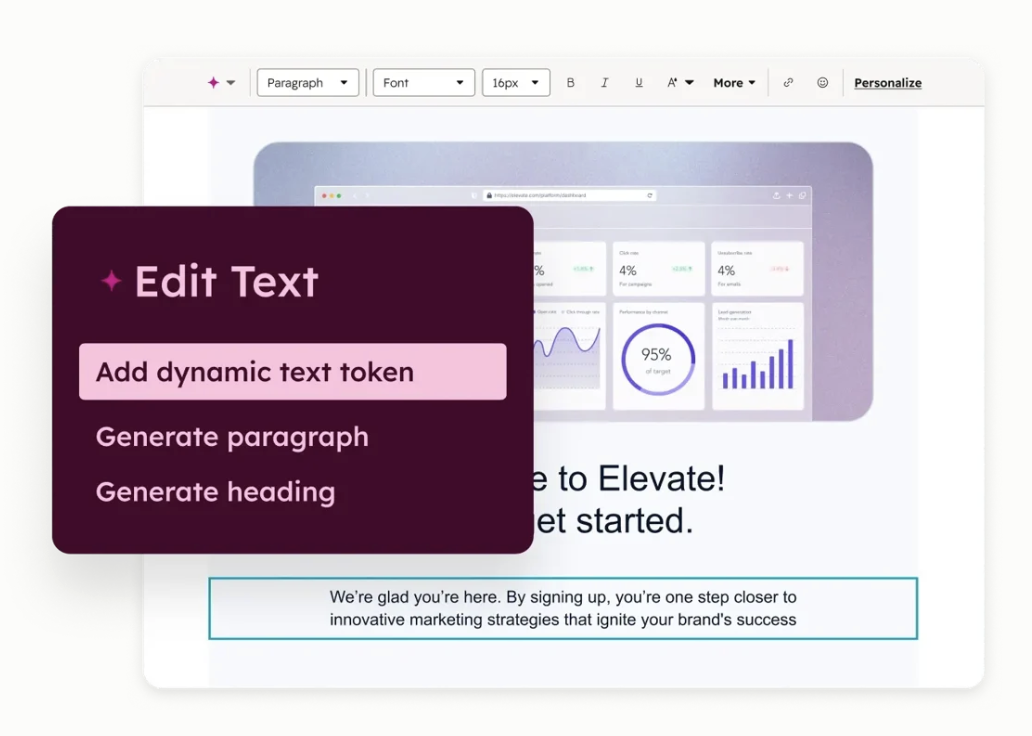
Marketing Hub is HubSpot’s platform for attracting visitors, generating leads, and nurturing prospects into sales-ready opportunities.
It centralizes content creation, automation, lead qualification, and attribution reporting so marketing teams can operate strategically instead of reactively.
What Are the Benefits of HubSpot Marketing Hub?
- Increase qualified traffic
- Convert visitors into leads
- Automate lifecycle nurturing
- Attribute revenue to marketing efforts
- Personalize content and messaging
- Improve lead quality for sales
What Are the Key Capabilities of HubSpot Marketing Hub?
- Email marketing and automation
- Landing pages and forms
- Blog tools and SEO recommendations
- Social media publishing and reporting
- CTAs and personalization
- Lead scoring and segmentation
- Campaign reporting and attribution
When Marketing Hub is connected to the HubSpot Smart CRM, teams get full visibility into the customer journey and can execute a true HubSpot RevOps approach—aligning marketing, sales, and service around shared data and outcomes.
What Is HubSpot Sales Hub?
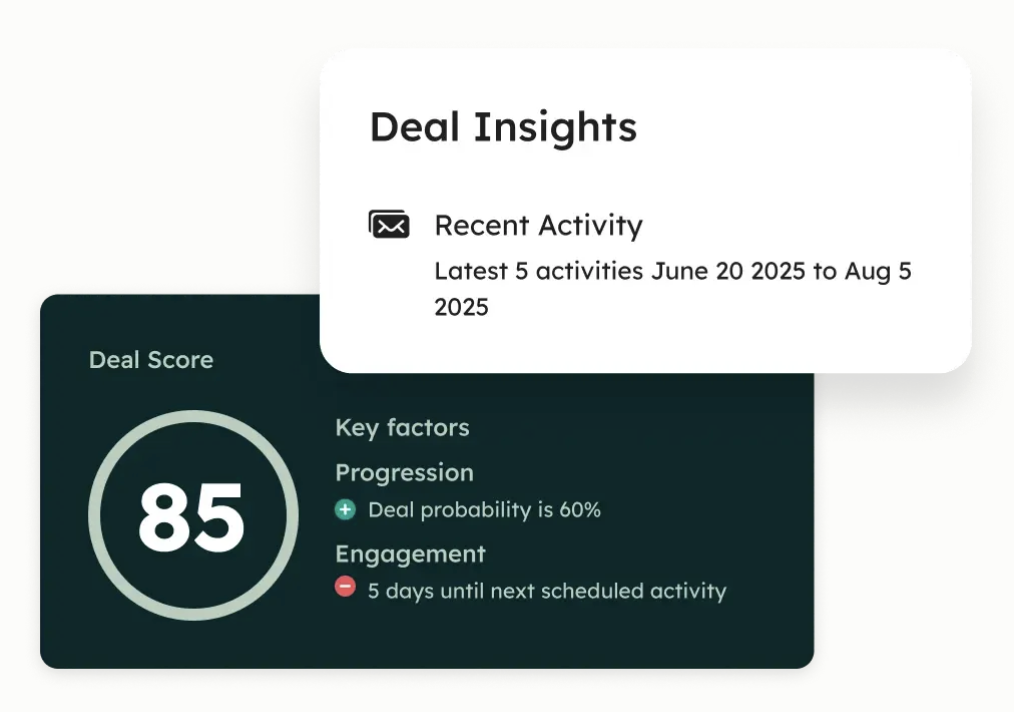
Sales Hub is built to help sales teams manage pipelines, automate administrative work, and close deals more efficiently.
It connects directly to the CRM and marketing tools, giving sales reps full context into a lead’s journey and the tools needed to take action in real time.
What Are the Benefits of HubSpot Sales Hub?
- See which leads are active, engaged, and ready to talk
- Prioritize outreach with automated tasks and sequences
- Build accurate, visible pipelines
- Shorten sales cycles through automation
- Forecast revenue with better accuracy
What Are the Key Capabilities of HubSpot Sales Hub?
- Deal pipelines and forecasting tools
- Email tracking and sequences
- Meeting scheduling
- Pipeline automation
- Playbooks for standardized processes
- Quotes and payment collection
- Real-time notifications when leads engage
What Is HubSpot Service Hub?
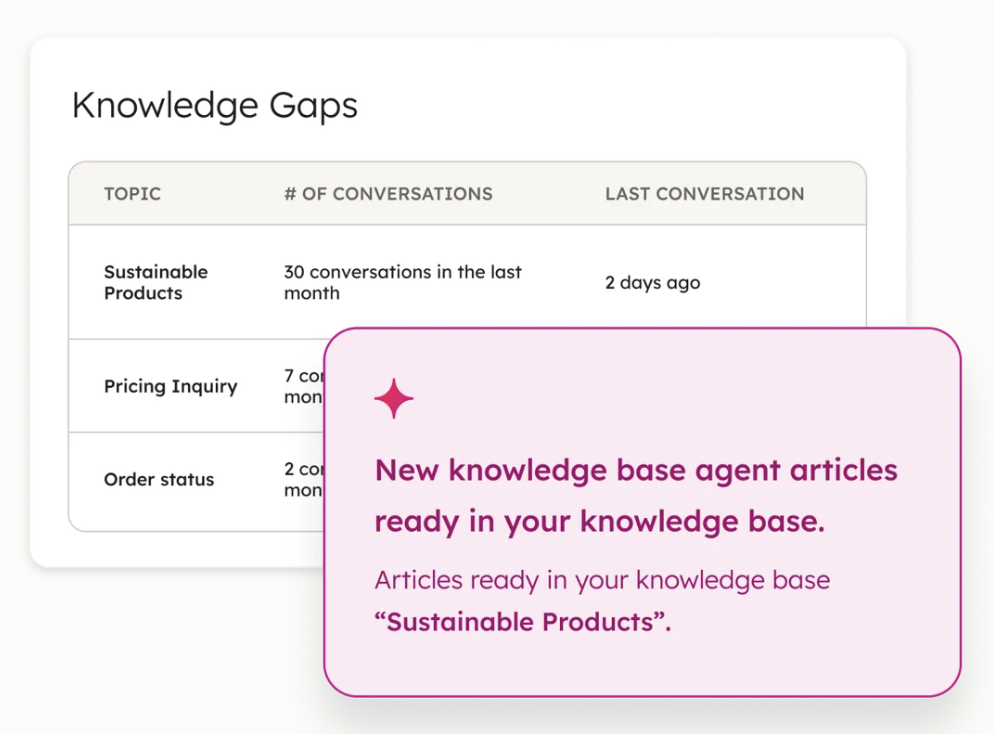
Service Hub centralizes customer support interactions, ticket management, feedback collection, and knowledge base tools—ensuring a consistent and high-quality customer experience.
What Are the Benefits of HubSpot Service Hub?
- Resolve issues quickly
- Benefit from automated ticket resolution and AI capabilities
- Provide customers with self-service options
- Track and improve satisfaction
- Connect service interactions back to revenue
What Are the Key Capabilities of HubSpot Service Hub?
- Help desk and ticketing
- Customer portal
- Live chat and chatbots
- Knowledge base
- Customer satisfaction and Net Promoter Score (NPS) surveys
- Service Level Agreements (SLAs) and service automation
What Is HubSpot Data Hub?
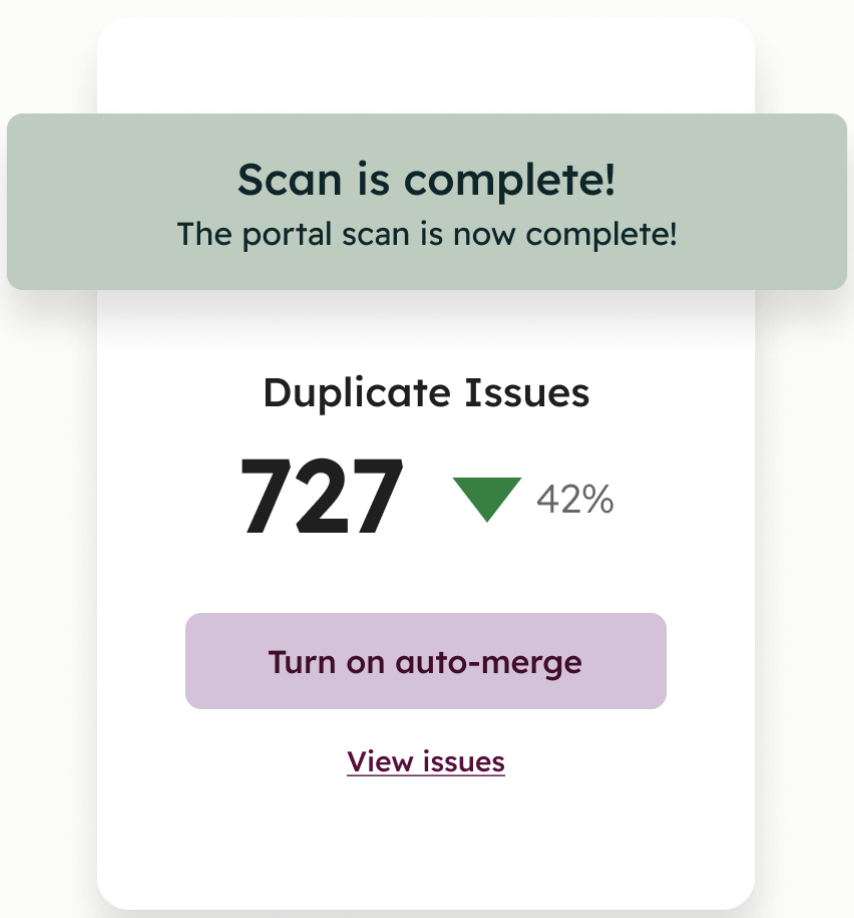
Data Hub is HubSpot’s AI-powered data management platform. It centralizes, cleans, and activates customer data so every team works from a single, reliable source of truth.
Data Hub solves one of the biggest challenges in RevOps: turning scattered, inconsistent information across systems into usable intelligence that directly supports marketing, sales, and service.
What Are the Benefits of HubSpot Data Hub?
- Integrate data from multiple systems without building custom pipelines
- Improve CRM data quality automatically
- Create unified datasets for reporting, AI assistance, and automation
- Ensure that every team—and every workflow—has access to accurate, consistent information
- Reduce time spent manually fixing data issues
What Are the Key Capabilities of HubSpot Data Hub?
- Blend first-party and third-party data into unified datasets
- Two-way syncing with major cloud data platforms
- 100+ integrations that keep records aligned automatically
- Automated cleanup, formatting, and consistency checks
- Centralized visibility into issues across objects and fields.
- Enforce data standards with workflows and AI-powered logic.
- Build curated datasets and calculated fields for reporting.
- Dashboards that consolidate marketing, sales, and service data into one source of truth
Download Our Free HubSpot DataHub Guide →
HubSpot vs. Other CRMs: How Does It Compare?
Most CRMs store customer data. HubSpot goes further by combining its Smart CRM with marketing, sales, service, content, and data management tools—all on one unified platform. That gives organizations a faster path to value.
HubSpot vs. Salesforce
- Faster time-to-value with a more intuitive setup
- Unified Smart CRM rather than multiple modules and add-ons
- Lower administrative overhead; fewer technical resources required
- Built-in alignment between marketing, sales, and service
HubSpot vs. WordPress (CMS)
- CMS Hub connects directly to your CRM and customer data
- No plugin maintenance or security patching
- Personalization and automation built into the CMS
- Native reporting tied to pipeline and revenue
HubSpot vs. Marketo
- All-in-one platform vs. marketing automation only
- Easier for sales and service teams to use alongside marketing
- Smart CRM provides cleaner data and more reliable attribution
- Automation extends across the full customer lifecycle, not just marketing